
Tel:
+86-0511-88891902

What are you looking for?
For a winter collection, fleece scarves generally provide a strong combination of warmth, softness and cost efficiency; knitted scarves offer greater visual texture, styling flexibility and fashion value; neck warmers provide a compact, practical solution with lower material volume and easier layering.
The appropriate choice depends on the customer's use case, target price, collection aesthetic, climate and merchandising strategy. Rather than treating one format as universally superior, buyers should evaluate each product according to the role it needs to play in the collection.
The three products solve related but different merchandising needs.
| Product | Primary Strength | Typical Positioning | Key Consideration |
|---|---|---|---|
| Fleece scarf | Warmth and softness | Functional / commercial | Surface quality and pilling |
| Knitted scarf | Texture and fashion | Fashion / premium | Knit structure and finishing |
| Neck warmer | Compact coverage | Functional / active | Fit and stretch |
| Fleece neck warmer | Lightweight warmth | Outdoor / everyday | Elasticity and recovery |
| Knitted neck warmer | Fashion + warmth | Lifestyle / winter fashion | Knit density and fit |
The choice should be made according to the collection's commercial role rather than material preference alone.
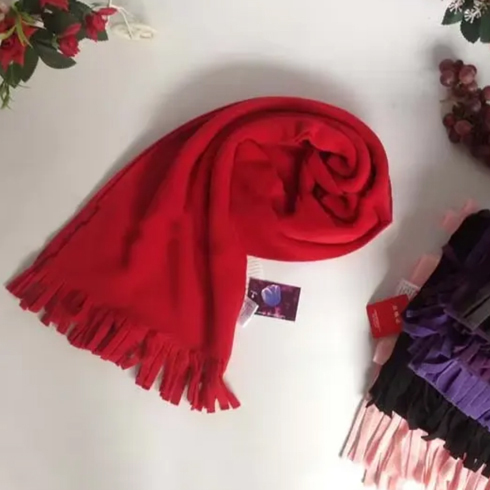
Fleece works well when warmth, softness and cost control are primary requirements.
It is particularly suitable for:
family winter collections;
outdoor-oriented products;
promotional programs;
value-focused retail;
high-volume programs.
Fleece also provides a relatively smooth surface for printing, embroidery or other decoration.
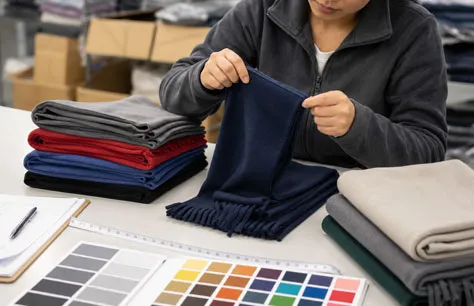
Brands developing a commercial winter assortment can consider fleece scarf wholesale when comparing fabric weight, finishing and bulk sourcing requirements.

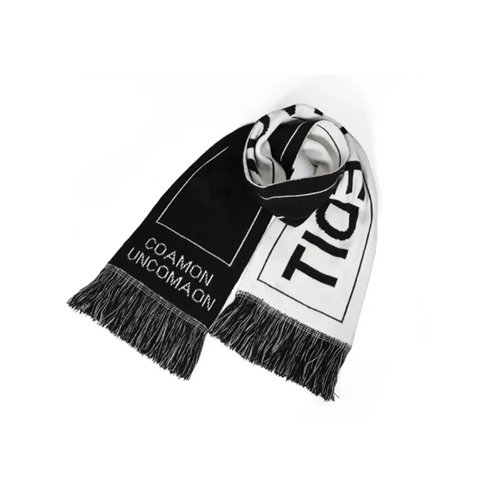
Knitted scarves are particularly effective when texture and visual identity are important.
Knitting allows brands to develop:
rib structures;
cable structures;
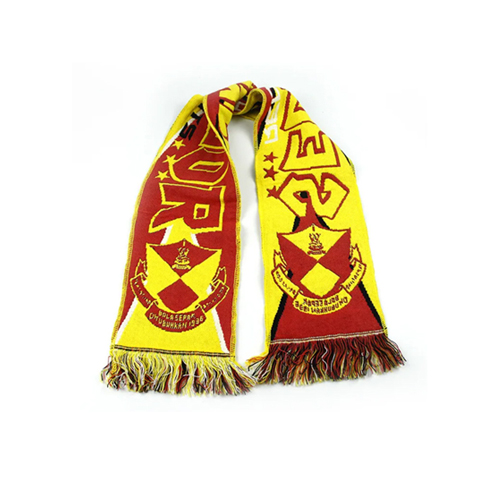
jacquard patterns;
stripes;
color blocks;
logo motifs;
fringe details.
A knitted scarf can therefore contribute more strongly to the fashion identity of a winter collection. For fully patterned designs, brands can work with a jacquard scarf manufacturer to build the logo or motif into the knit itself.
The trade-off is that knit construction can require more development work, especially when the design includes custom patterns.
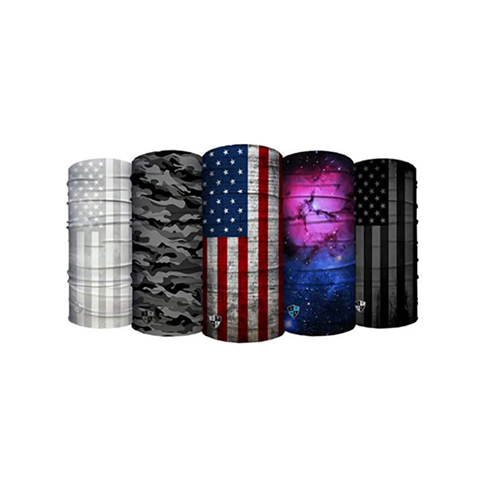
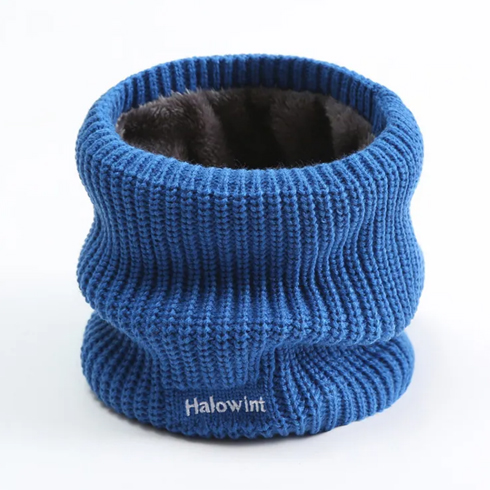
A neck warmer is compact and easy to wear.
It can provide:
reduced bulk;
easy layering;
stable neck coverage;
simple packaging;
lower material consumption.
This makes neck warmers useful for active, outdoor and practical winter collections.
Fit is particularly important because the product sits close to the neck. The opening must provide sufficient stretch while returning to its original shape.
Brands can benchmark neck warmer wholesale options when evaluating different construction and merchandising approaches.
Common choices include fleece, polyester blends, acrylic and knitted constructions.
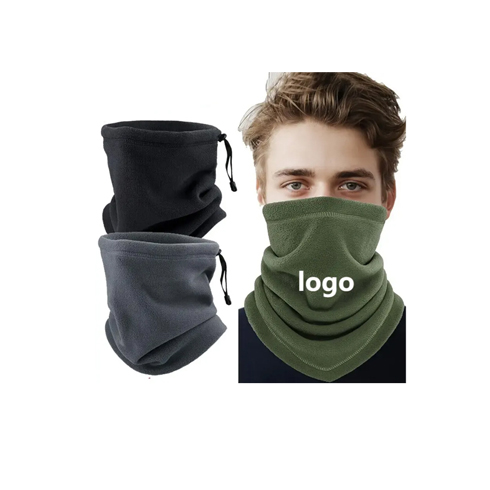
A fleece neck warmer can provide soft, lightweight warmth, while a knitted version may deliver greater fashion value.
The correct choice depends on the collection.
For example, an outdoor collection may prioritize moisture management and compactness, while a lifestyle collection may prioritize texture and color.
Weight affects warmth, drape, packaging and shipping.
A heavier fleece or knitted scarf can provide greater perceived warmth, but it also increases material usage and shipping volume.
A lighter scarf may be easier to layer and more suitable for transitional climates.
Buyers should therefore specify finished weight together with dimensions.
A useful product specification can include:
| Parameter | Fleece Scarf | Knitted Scarf | Neck Warmer |
|---|---|---|---|
| Width | Defined by target coverage | Defined by drape | Compact |
| Length | Often long | Often long | Short / tubular |
| Stretch | Low to moderate | Moderate | Moderate to high |
| Structure | Fabric-based | Stitch-based | Fabric or knit |
| Branding | Print / embroidery / label | Label / jacquard / embroidery | Label / print |
| Packaging | Folded | Folded | Compact |
| Primary Value | Warmth | Texture | Convenience |
These are development ranges rather than universal standards. Exact specifications should be established according to the target market and product design.
Fleece offers a relatively straightforward surface for printed logos and embroidery.
Knitted scarves can integrate branding into the structure through jacquard knitting or use woven labels and patches.
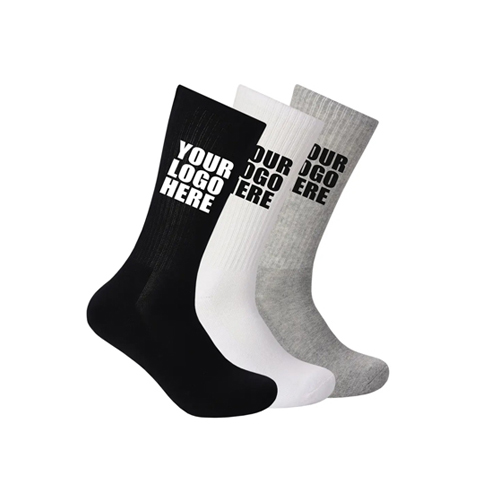
Neck warmers often use small woven labels, printed branding or jacquard details.
The scale of branding should reflect the product.
A large logo may work on a promotional fleece scarf but look excessive on a premium knitted accessory.
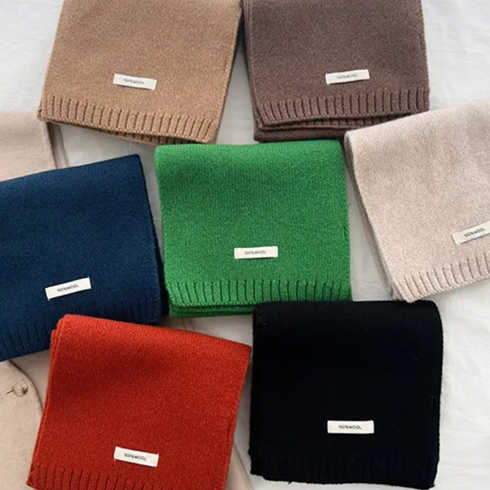
Winter accessories are highly visual, so color strategy can have a significant effect on collection performance.
A practical assortment can combine:
commercial neutrals;
seasonal colors;
one or two fashion accents.
The important factor is consistency across products.
If the same seasonal color is used in a fleece scarf, knitted scarf, beanie and neck warmer, customers can create coordinated sets without the products needing identical construction.
Neck warmers generally require the least packaging volume.
Fleece scarves can be folded efficiently, although thickness varies with fabric weight.
Knitted scarves may require more careful folding because bulky knit structures and fringe can create irregular packages.
Packaging should be tested before carton quantities are finalized.
This is particularly important for wholesale buyers because small differences in folded dimensions can influence carton efficiency and freight cost.
The approval checklist should reflect the construction.
For fleece scarves, focus on:
fabric weight;
softness;
color;
pilling;
edge finishing;
dimensions;
branding.
For knitted scarves, focus on:
gauge;
stitch consistency;
pattern alignment;
dimensions;
stretch;
fringe;
yarn quality.
For neck warmers, focus on:
opening circumference;
stretch;
recovery;
seam comfort;
coverage;
material thickness;
branding.
A generic approval checklist is therefore less effective than product-specific inspection criteria.
Knitted scarves often offer the greatest design flexibility because branding can become part of the knit pattern.
However, fleece scarves may offer more straightforward surface decoration, particularly for promotional or highly visible logos.
Neck warmers generally have less surface area, so branding must be more restrained.
Brands should choose the branding method according to the desired consumer experience rather than simply selecting the cheapest decoration method.
Private-label brands should select based on positioning.
A premium fashion label may prefer knitted scarves because texture and pattern can become part of its visual identity.
A value-oriented retailer may prefer fleece because of its balance between warmth and production economics.
An outdoor or active lifestyle brand may favor neck warmers because of their compact fit and layering capability.
There is no single construction that serves every retail strategy.
Yes, and a multi-format assortment can actually create clearer product segmentation.
For example:
Fashion segment: knitted scarf
Everyday warmth segment: fleece scarf
Active / practical segment: neck warmer
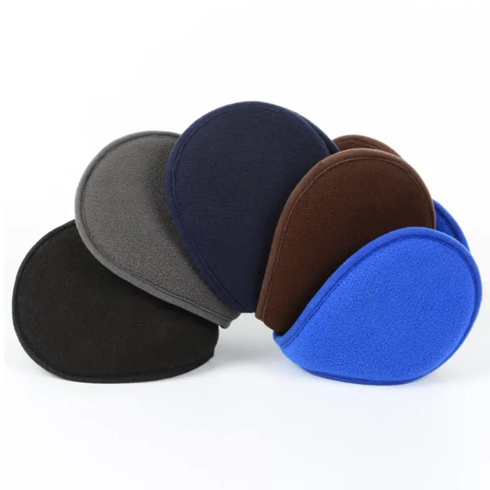
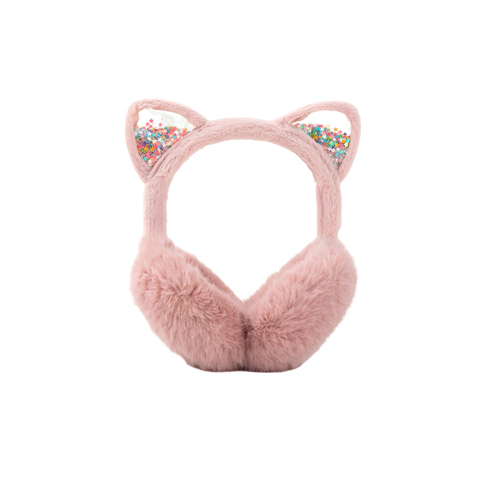
This structure allows a retailer to address different consumer needs while maintaining a common color palette and branding system. Buyers can also expand the winter assortment by adding complementary accessories such as earmuffs wholesale to create coordinated sets that increase average order value.
It also creates opportunities for cross-selling.
A professional sourcing discussion should cover:
material composition;
fabric or knit structure;
finished dimensions;
weight;
color standards;
shrinkage;
pilling;
stretch and recovery;
branding;
labeling;
packaging;
MOQ;
sample lead time;
production lead time.
If wool is used, buyers should also verify fiber-content documentation and applicable labeling requirements. The FTC states that covered textile and wool products generally require fiber-content, country-of-origin and responsible-company information.
Sustainability claims should be tied to verifiable material and supply-chain information.
For wool, certification systems such as the Responsible Wool Standard have historically provided a framework for animal welfare, land management and social requirements, while Textile Exchange is transitioning toward its Materials Matter Standard.
For private-label brands, it is better to specify exactly what claim can be supported rather than using broad terms such as "eco-friendly" without documentation.
Not necessarily. Warmth depends on material, thickness, construction, coverage and fit. A dense knitted scarf can be highly insulating, while a lightweight fleece scarf may provide less insulation.
A neck warmer can be practical for active use because of its compact shape and stable coverage. However, material performance should be evaluated according to the intended activity and climate.
Knitted scarves generally provide more opportunities for texture, patterns, jacquard designs and decorative construction, making them useful for fashion-led collections.
They can be more cost-efficient depending on material, dimensions, decoration and order quantity. Custom knit structures can involve additional development and production complexity.
Yes. Woven labels, embroidery, jacquard branding, patches, printing and customized packaging can all be considered depending on the product construction.
They can serve different consumer needs. Scarves provide greater styling flexibility and visual presence, while neck warmers emphasize compact coverage and easy layering.
Fleece scarves, knitted scarves and neck warmers should not be evaluated as interchangeable products. Each has a distinct combination of warmth, construction, fit, visual identity, packaging efficiency and branding potential.
Fleece is well suited to commercially focused winter programs where softness, warmth and cost control matter. Knitted scarves are particularly useful when texture and fashion identity are central to the collection. Neck warmers provide a compact alternative for practical, active and layering-oriented applications.
For retailers and private-label brands, the strongest winter assortment may therefore combine the three formats rather than selecting only one. By assigning each product a clear role and applying product-specific sample approval criteria, brands can build a more coherent collection while controlling sourcing risk.